I sat in at ArtsWok’s Fundamentals Lab with their first batch of trainees on two occasions in the last few weeks. I caught a glimpse into the frameworks introduced and exercises the trainees engaged in and couldn’t help but look back at my own facilitation journey and reflect on what brought me here.
I always wondered, besides the obvious passion for the arts, what else had led me down this path towards being the social arts practitioner and coach I am today. I started out in art education upon graduating from Fine Arts, but not because I wanted to impart knowledge or nurture the next generation as most teaching professions are inspired to do. I recall being drawn to participatory approaches and communal themes in my schooling days, believing strongly until now that art is something to be shared, to be experienced with others, something that is active and can transform.
As an educator, I treated the classroom like a black box, where learning and self-expression can be directed through various elements to facilitate children’s discovery of the world. The setup of the classroom, the art-making, the lesson slides, sequence of information, a timed reveal and inquiry-based discussions were elements I could play around with - as if they were props and actors of a play. For me, the classroom was a window of opportunity to instill wonder and awe about the world to a room full of children who are only just opening their eyes.
As a facilitator, practicing this philosophy was no different. Whether it is a 30-min segment or a 2-hour tour, I took it as a little bubble of time and space I can have with my participants where we get to co-create a literal other-worldly experience.
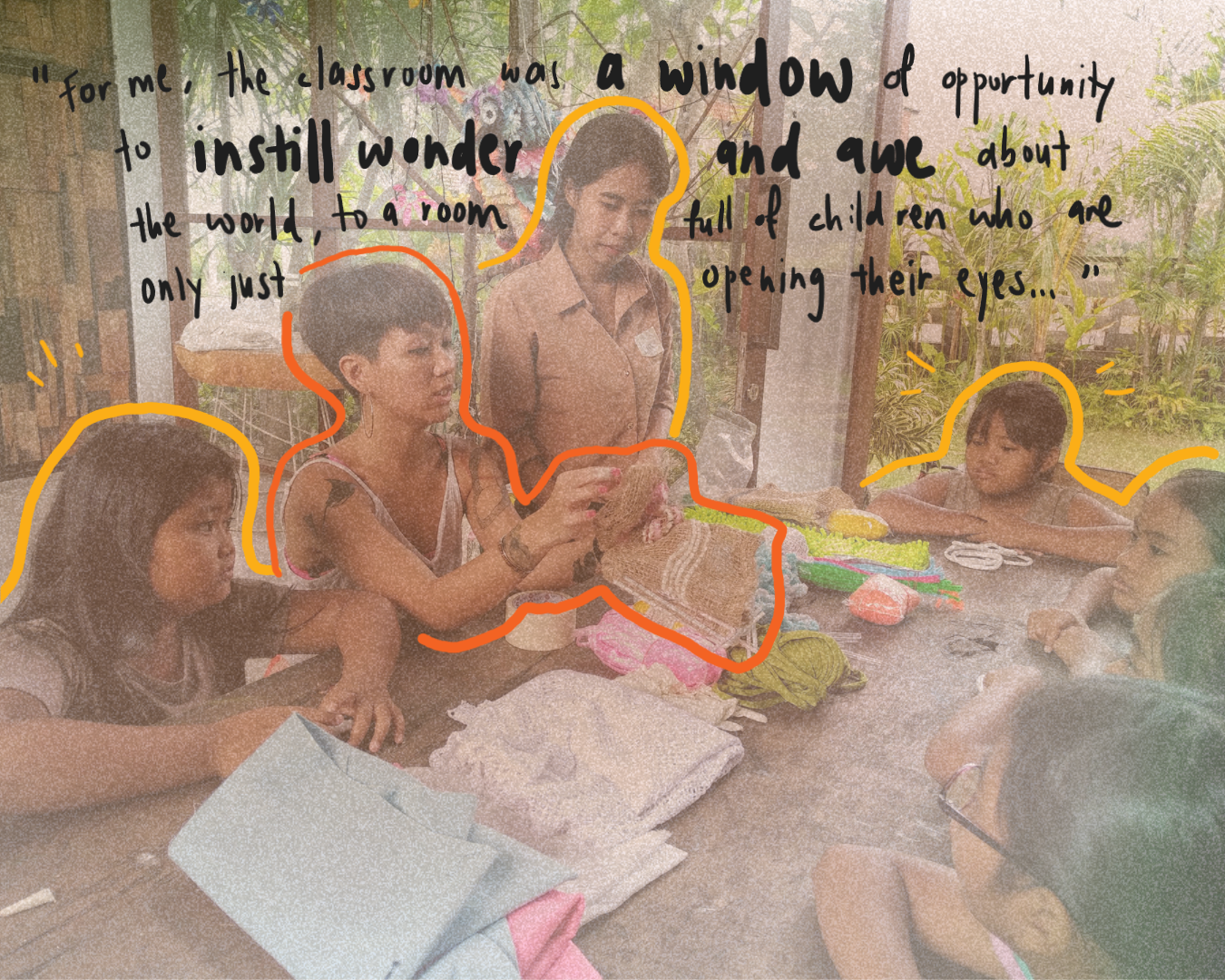
It was in 2020 and I was conducting an artmaking session as part of a residency-based project in Bali with a few of the students that attend KULIDAN Art Space’s regular art classes.
Facilitation is a craft and having honed it for over a decade now, I have become more conscious of what inspires me, what my non-negotiables are and what is left for experimentation. A big part of knowing these requires me to be a participant first, the one on the receiving end of facilitation. Whenever I would attend or participate in an experience, I’d take mental notes of the stuff that bugged me. The inner dialogue filled with comments and questions like: ‘why aren’t there more illustrations?’, ‘Tactile aids will be so good to include here’, ‘if only we could pause at this time for some reflection.’ Each of these notes inevitably become things I would work on as a facilitator. It informed how I prepare for my sessions and with every experience gained, I developed my own facilitator’s toolkit with strategies, approaches and grounding philosophies I would frequently return to.
On the surface, tools like - slides, mind maps, sketchbooks, post-its - can seem so mundane and common sense. Yet when included in combination with facilitation can channel so much power to navigating energies, facilitating learning, discovery, reflection and self-expression effectively.
The way I facilitate considers two broad aspects - the hardware and the software.
The hardware are the inanimate things, the tangible tools which can include slides, visual aids, stationary, the arrangement of the room, art materials and so on. The software are the intangible things like the presence and energy I bring to the room, the spaces I hold for individuals and groups, the pauses, the silences, the instructions I give, the sequence of events, the prompts, the process. When combined, the hardware and software work together to engage participants in experiencing anything from the discovery of the self, others and the world, to reflection, experimentation, imagination, wonder, awe, creativity, transformation, change - even all of the above.
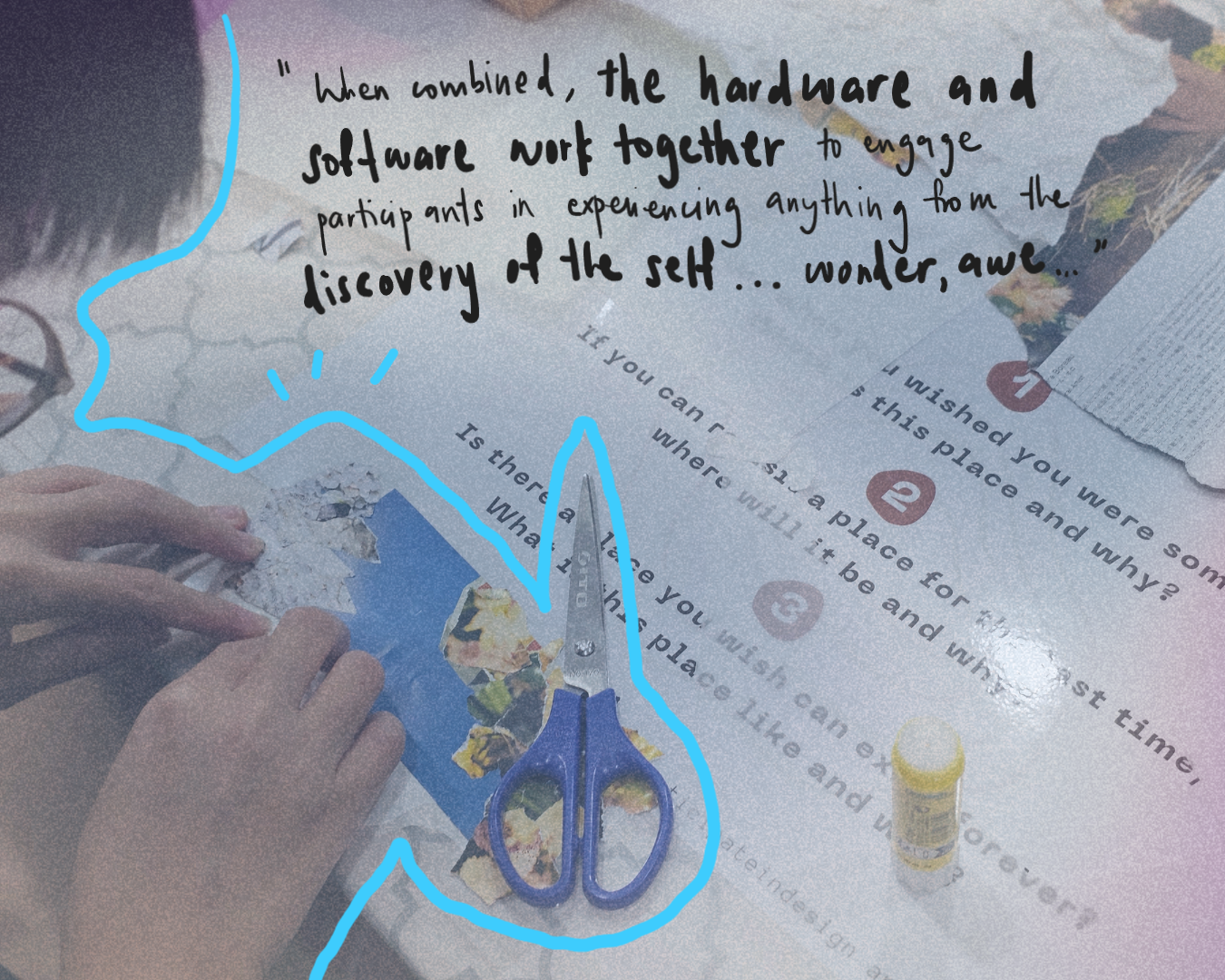
A self-directed collage-making activity as part of a community engagement project based in Macpherson. Participants of all ages were invited to consider their relationship with spaces based on the prompts provided.
The aim for me as a facilitator is to effectively include enough and suitable hardware so that the software can take its course more naturally and seamlessly. As an artist who practices this craft, the hardware component is where I can play around with and experiment most - the part I can apply my creativity to. When varied in combination with the software, there is a certain unpredictability and level of chance as to what the participants will experience and walk away with. For me, this is the magical part about what I do and the kind of creative stimulation and experimentation that keeps me going.
Another wisdom I recently really understood is that of quality over quantity.
In my season of being an art educator, I practiced this from a more technical sense. As part of classroom management, I was trained to understand that a small teacher-to-student ratio meant more of my attention can be afforded per student, ensuring their learning will not be compromised. But lately, and especially in my most recent run of Piece of Mine ( a workshop series as part of Both Sides, Now), this ratio presented itself in a different kind of unfolding - and in it came a precious revelation.
The run started out with twelve participants, and concluded with only five remaining. Those who did not continue had their own valid reasons, but what moved me was how some of them returned during the showcase (the final session) to celebrate and witness their peers. Through the little chats I had with them, I could sense that they were present, not just as guests, but they also felt like they were a part of something beyond having a regular attendance.
Numbers like full participation, regular project requests and immediate organic client reach used to bug me, and were unnecessary KPIs I enforced on myself. On bad days, the intrusive thoughts relating these numbers to the value I bring to the world can win and it was a downward spiral I knew I did not need. I’d catch myself making plans to channel effort and energy into crafting marketing copies and announcing my available offerings, each time straying further and further away from the essence and value of the work that I can and want to do.
Now, my understanding of ‘quality over quantity’ is a deeper knowing that goes beyond what numbers reflect. It is the quality of a connection between people that a seasonal, adhoc programme or engagement cannot quantify. It is the quality of one returning client (versus ten new ones) who fully believes in my methodology and wants to do deeper work together. It is the quality of a genuine relationship of safety and trust, human-to-human, not facilitator-to-participant. It is where 1+1 does not equal to 2, but 3, or even 4, or 5.
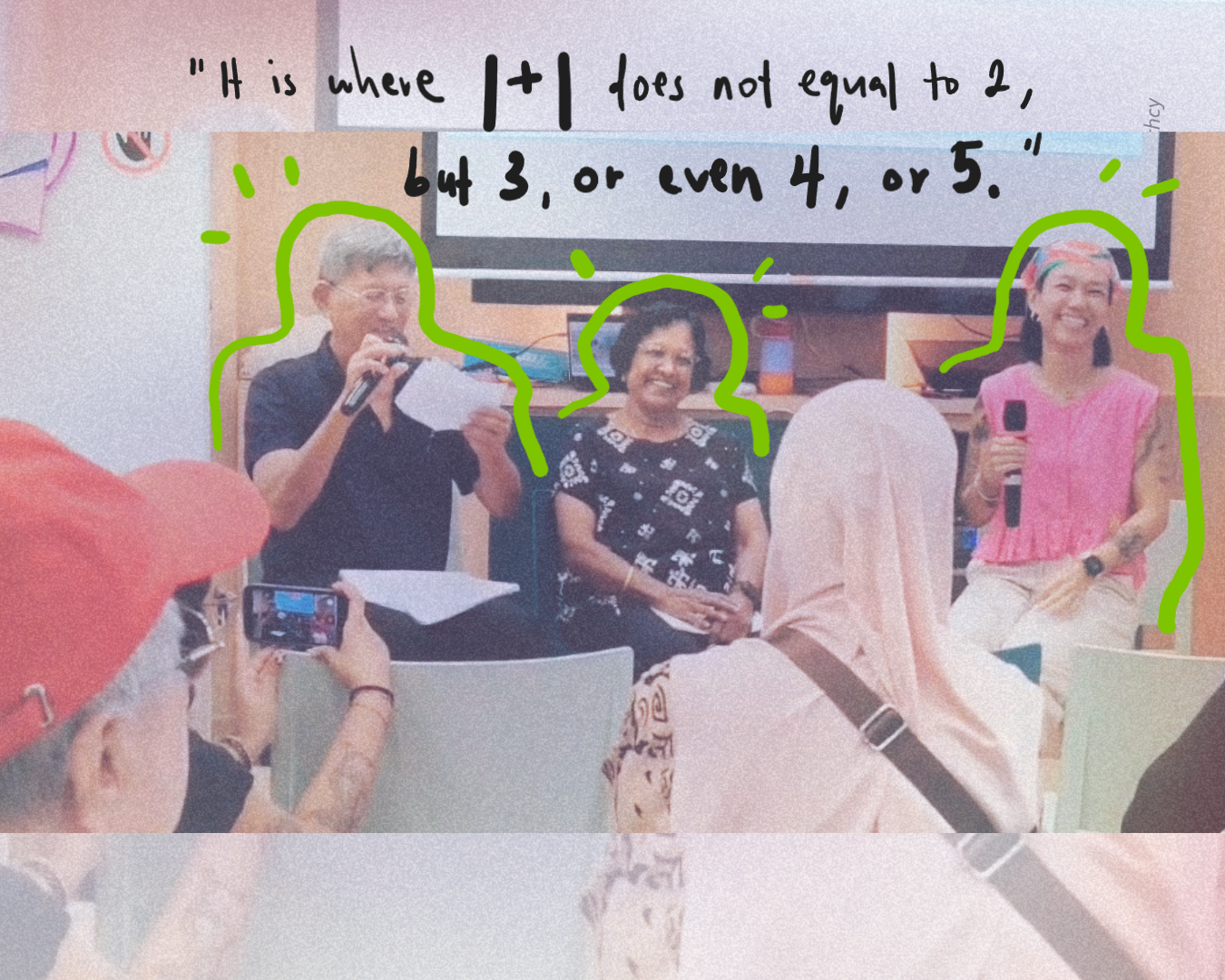
The panel sharing segment as part of the showcase programme during the recent run of Piece of Mine in July 2026.
In the past year, facilitating programmes like Art Sandbox and Skillseed’s Resilience Trails also revealed added perspectives about what makes a good facilitator, and it is not just someone who can deliver a script and follow the lesson plan from start to end.
A good facilitator is one who can connect to who they are as a person and channel it into the way they show up.
Because as facilitators, we are dealing with the delicacy of the rich human experience. It is important at some point to ask ourselves, do we see our participants as the persons that they are, rather than names on an attendance sheet? When the time comes to meet people where they are at, can we let go of how the ego wants to deliver a good programme as it was originally designed?
Especially in the facilitation work that Piece of Mine asks, where the content we deliver and activities we engage them in has everything to do with life and death. And yet no one is the expert on any of them. If not to impart learning, share new knowledge or spread awareness, what exactly are we facilitating then?
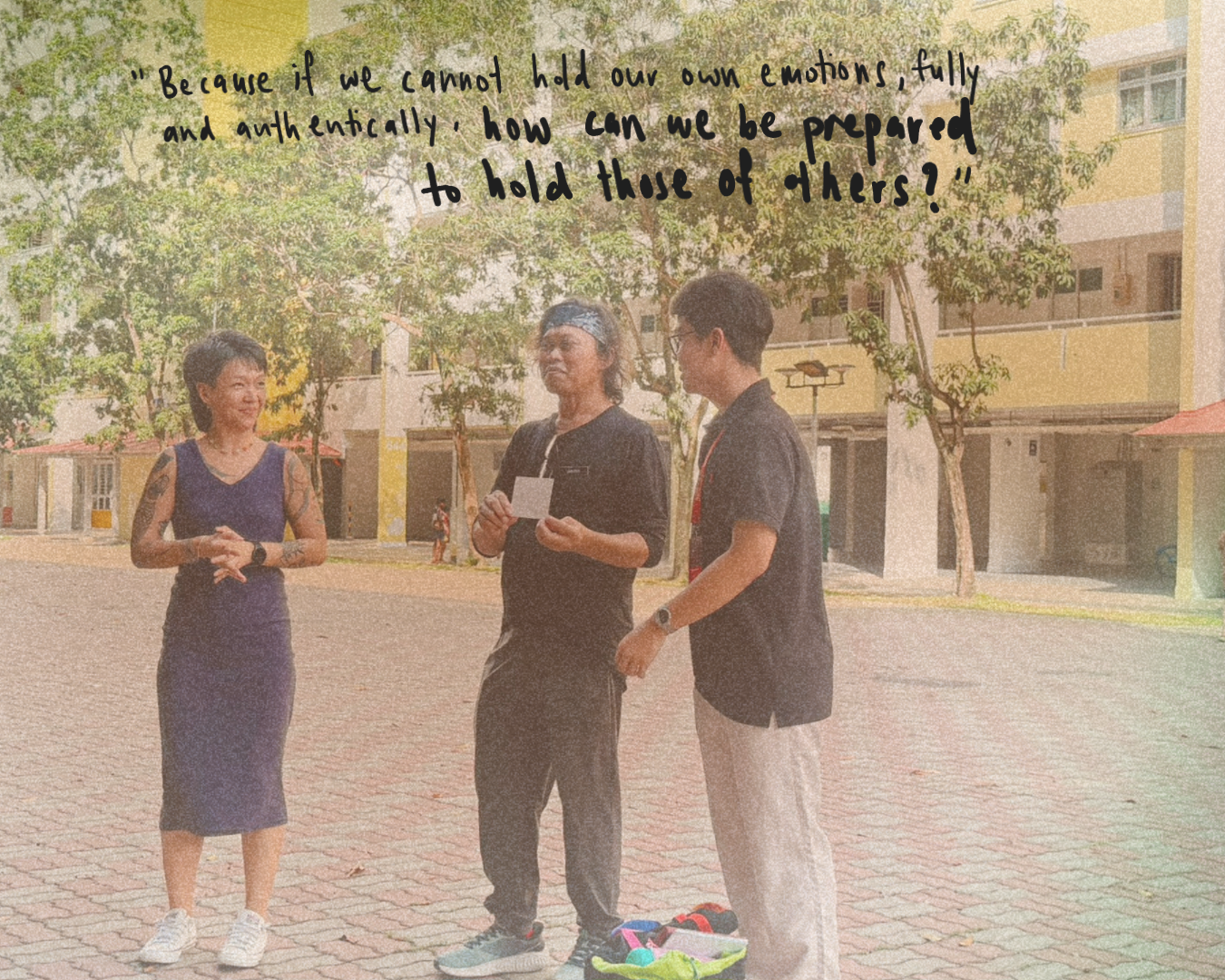
I was co-facilitating with Community Guide, Camy on one of Skillseed’s Resilience Trails. We hosted a group of students visiting from our neighbouring ASEAN countries as part of a symposium organised by NUS.
When I was asked to facilitate Piece of Mine and pilot its first run, I was filled with nerves. Despite having been the assistant artist for tides in 2024, I knew full well that the role of the lead artist facilitator meant that I will not have the emotional shield an assistant status sometimes provides. It was then that I had to be vulnerable with myself and confront my own thoughts feelings about life and death. Because if we cannot hold our own emotions, fully and authentically, how can we be prepared to hold those of others? In understanding first how I felt about life and death, it gave me the stable ground I needed to stand on while facilitating the journeys of the seniors. I need to experience the trajectory of the landscape one would walk on to know just how treacherous or smooth the walk was going to be, not for the sake of knowing more nor to be the expert, but to be able to practice empathy and compassion for when the moment calls for it.
These are only some of the principles I operate from, and at some point down the road, I’d like to dive into the hardware, technical aspects of it all. Through this giant piece of reflection, I can see how the pieces have converged to inform how I practice as an artist, an educator, a coach and a facilitator. The extend of empathy, compassion, kindness, agency and imagination I can afford to myself is proportionate to what I in turn offer to others. The classroom as a black box, the spirit of play, a disciplined reflective practice, and the constant reminder to be human are pieces that contribute to the puzzle of a practitioner I am today.
And I hope for as long as I continue to look at the mirror into myself, I can apply it to enrich the lives of others who trust and are willing to open their hearts to me.