It has been a few days since rounding up the pilot of Piece of Mine. As part of ArtWok’s flagship programme, Both Sides, Now, Piece of Mine is an 8-week workshop series centered around living well and leaving well, to engage senior participants to discuss life and death openly and discover more about themselves through arts-based approaches, guided reflections and group sharings. In the grand scheme of things, eight two-hour sessions is not at all enough to go through topics like ageing, end-of-life preparations, caregiving, rememberance, inheritance, legacy and more - afterall, most of us spend a whole lifetime just trying to figure such things out.
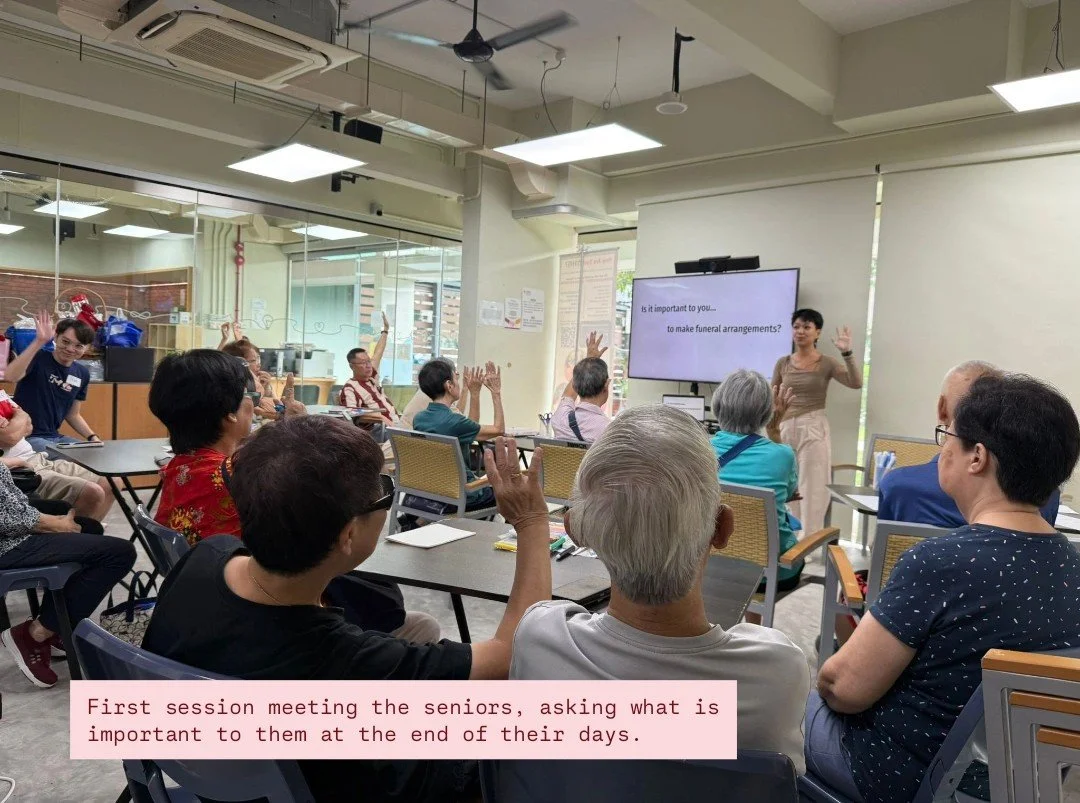
It was the first time meeting these seniors. As part of the session, I called a group vote, asking the seniors what was important to them at the end of their days.
Going in as an artist-facilitator in the first ever run of this workshop series, I knew that all my years of teaching and facilitation and my newly acquired techniques as a coach will be put to the test. It was the perfect arena for these mediums to be showcased and applied in this context, for risks to be taken, for intuition to guide and for instinct to be sharpened. Over the two months, some crucial parts of my methodology had been crystallised and I thought it apt to reference the elements of art as a tangible vocabulary to describe an otherwise intangible, ehpermeral practice and its mediums.
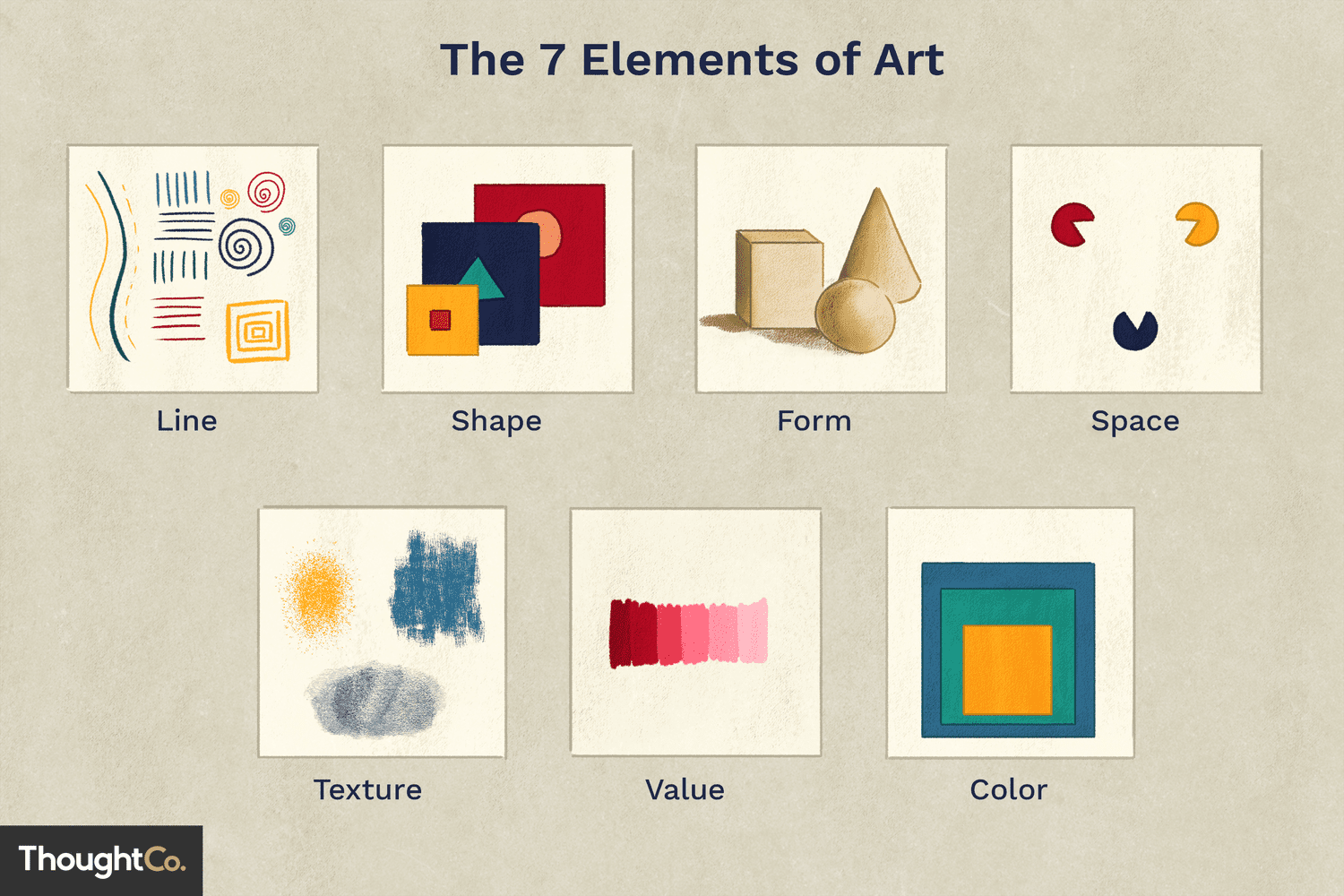
These are the seven elements of art used in the visual arts.
In my preparation and facilitation of the sessions, it was akin to the time a painter spends with his or her canvas and her paintbrush, or a sculptor with his or her glass blower. As each week went by, it became clear to me what I was actually crafting and making, what I was actively composing in the sessions. In a project journal entry I wrote for tides, I talked about the elements of community arts and listed trust, holding space and shared autonomy as key characteristics that differentiated the art form from social work and its close cousins. In this writing, I am listing aesthetic elements, relationally aesthetic ones, that in addition to the key characteristics of community art, differentiates the work of a social arts practitioner from that of a social worker.
Every person in the room is a different colour.
You know the feeling when you meet someone new for the first time, whether you are greeted with a warm hello or a cold nod of the head - for me, such interactions are initially registered as energy. Over time as I get to interact with these persons, the energy starts to gain more detail like colour, shape, form and sometimes even texture. I don’t mean this as a tangible visual that I see with my physical eyes, like how some can literally see a coloured aura around someone they are looking at. For me it is a sensing in my body, that if I closed my eyes and looked at the energy through my mind’s eye, I see the energy’s colour, shape and texture. I also feel the colour, shape and texture, hence I feel the energy.
In meeting and spending time with the seniors, this sensing was something I was especially attuned to - and I knew it is a guide I will rely on a lot. I used it most to figure out seating arrangements - like how to pair certain energies together so that one would bring out the other. Think about how we would match colours that complimented each other, or colours that were of the same family, depending on the effect that we wanted. Some colours when put together will clash, while other combinations might be too loud or too soft.
In visualising every person in the room as a different colour, seating arrangements is more than just a logistical consideration, but a cruicial aspect that can help to calibrate the energies of the session.
The timing and sequence of questions are like the lines you draw that creates shape and form.
Imagine trying to draw a shape - whether it is a circle, a square or a parallelogram - in order for the shape to be fully formed, the ends of every line must meet and close. And the position of every line will determine what shape gets created in the end. Likewise, for every session to be fully formed and have its own shape, every question must meet the other and in the end find its way from start to finish, to bring the session to a shapely close. Depending on the kind of questions you ask and when you ask them, the shape and form of the session will change . At the end, will it be a soft and organic shape, or a stiff and structured one?
If classroom lessons, guided museum tours and coaching conversations each had a shape, what would they be? Which of these will be a circle, and which one a square?
Pair conversations, small group discussions and big group sharings are positive spaces, while emotional space is negative.
And no, I don’t mean this literally. In the elements of art, positive space is the space that is tangible, physical and an addition to ‘the canvas’, while negative space is everything around it. Without positive space, negative space cannot exist. Based on this, emotional space cannot exist without the literal grouping of people (and their energies).
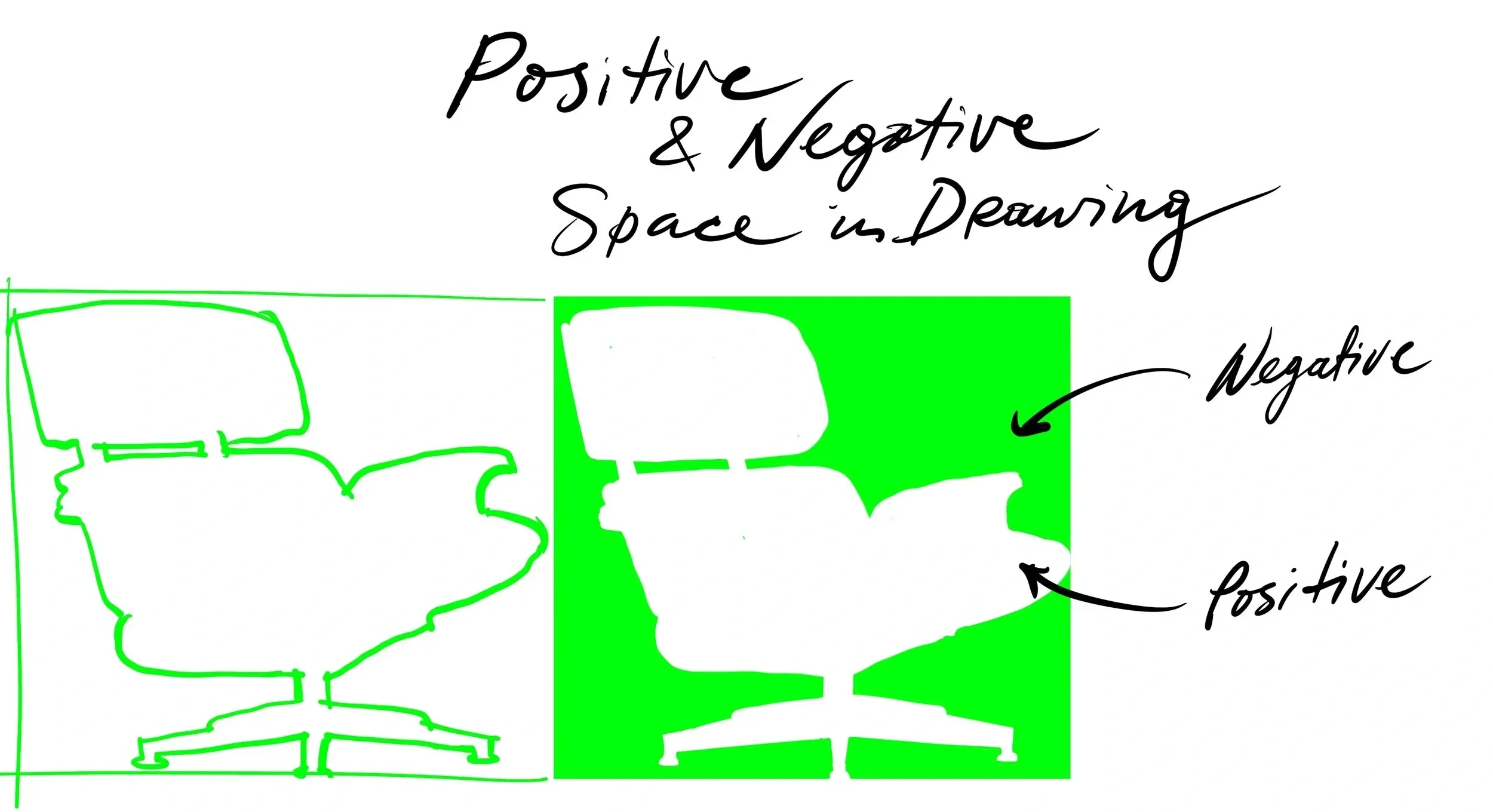
Image from the School of Sketching.
The kind of emotional space that gets created as a result of pair conversations or group discussions are significantly different and each of these has its own effect.
Now how do all of these come together in the weekly sessions and at the end of an 8-week engagement programme? How do I, a social arts practitioner, play around with these elements and use them to cultivate environments for dialogue, reflection and change? What determines a session/lesson/workshop ‘beautiful’ like a painting or drawing that is complete and ready to be displayed? Was there harmony, rhythm and balance? Was there contrast and emphasis? Scale and depth? (Yes, I’m now referring to the principles of art and design.) What kind of art am I actually making here?
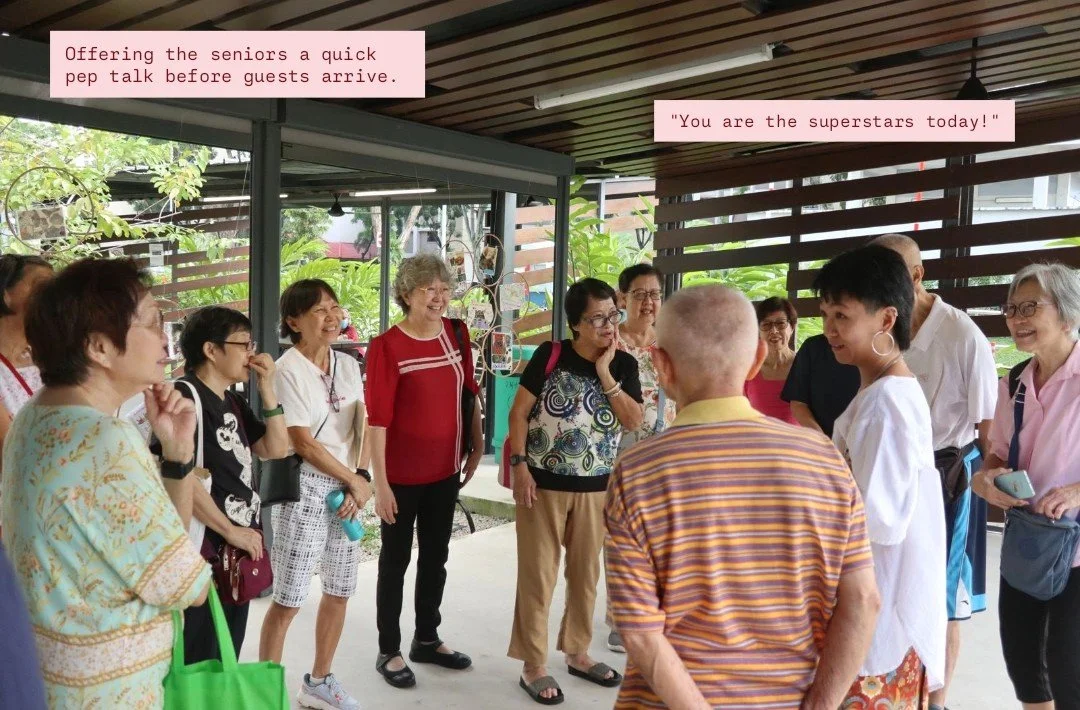
A little pep talk before our sharing session with other guests commences. This is the eighth week of the programme where our seniors get to share about their journey and be witnessed by others.
But see how much sense it all makes, when you use these principles to consider every form of human gathering you have ever had - an intimate dinner with your partner, a reunion with friends, a skill updgrading course, a university education, a lecture and more. What makes each one beautiful is when there was harmony and good rhythm, when the pacing was just right, when there was delicate balance and decent emphasis. And when all the elements are composed in a certain way to achieve all these principles - just like in a painting, a drawing, a photograph - there is beauty.
It is often difficult to explain what a social arts practice is like, especially to answer the question: “What kind of art do you make?” Without the right words (non-technical, non-jargon words), it is easy for this practice to be confused with social work or community service. The struggle is also to talk about being an artist without making something that is tangible, but I hope this writing provides a good start.
Having arrived here, I do find myself a little more equipped to describe what I am actually crafting and what I am actually in practice of. In the coming months, deeper reflection remains to be had about facilitation, education and coaching as fluid mediums, how they come into play with these elements and principles and how, when all of these are put together as a methodology, can contribute to refining the definition of a social arts practice.